
The Mechanics of Options Trading: How to Place and Manage Every Trade

Most people learning options stall at the same point. They understand the definitions, they can explain what a call is, and then they open a broker screen and freeze.
The gap is not knowing what options are. It is the mechanics of turning a view into an order, and then managing what happens next.
There are only four decisions, and they always happen in the same sequence: choose the strike, choose the expiration, place the order, manage the position. Get those four right and the strategy takes care of itself. Get them wrong and even a correct market call loses money.
Key Takeaways
✅ Every options trade is four decisions in order: strike, expiration, order entry, position management.
✅ Strike selection is about the outcome you are willing to accept, not the premium on offer.
✅ Longer-dated options are richer in implied volatility terms and better for selling; shorter-dated ones are cheaper and better for buying and hedging.
✅ Always use a limit order on options. Market orders hand you the worst price in a wide spread.
✅ Each position has only two ways the stock can move, and both responses can be decided before you enter.
Step 1: Selecting the Strike
Your strike price is where your right or your obligation kicks in. The correct strike depends on which of the four basic positions you are in, and the logic is different for each one.
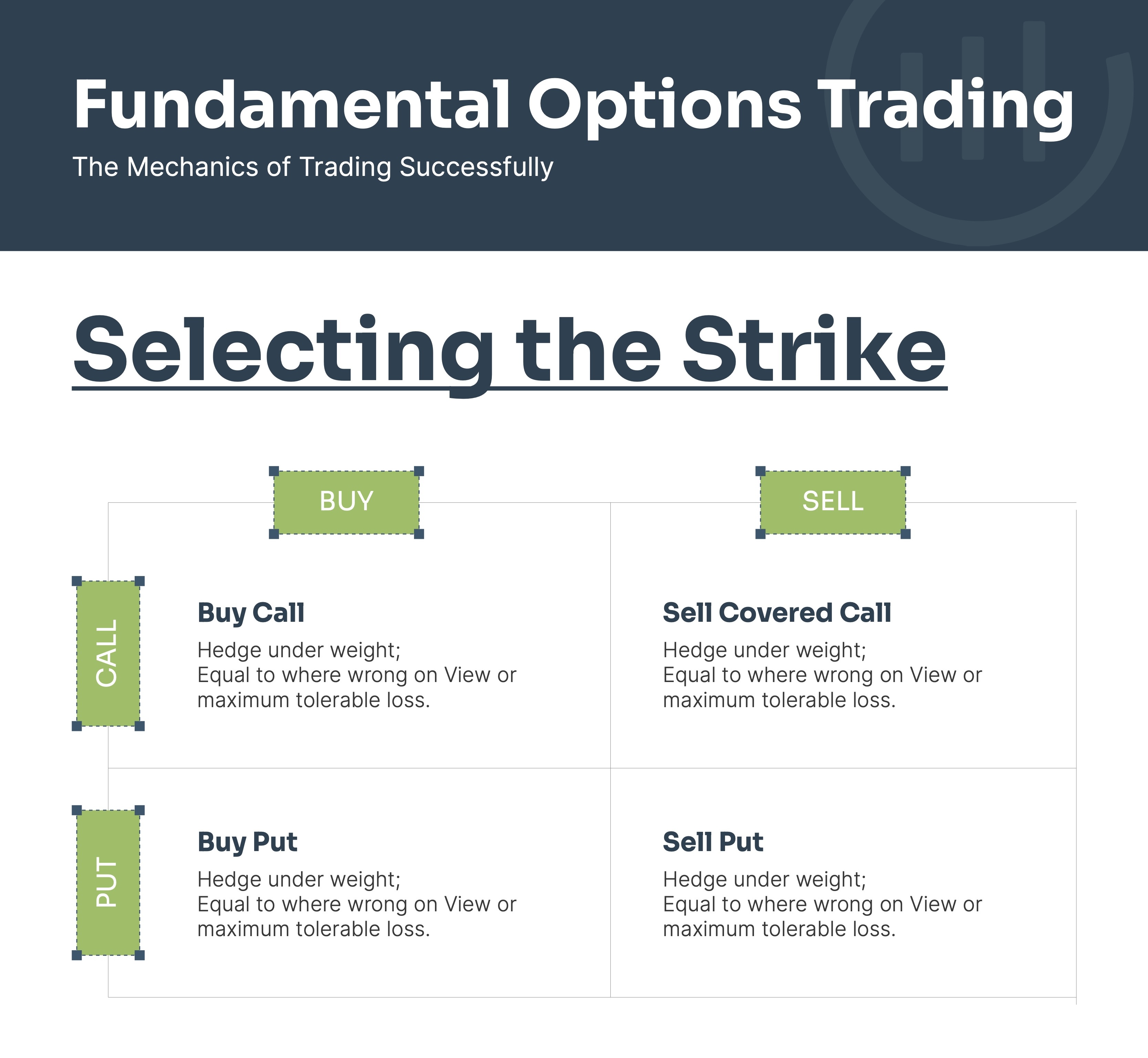
Buying a call. Choose the strike based on conviction and budget. Strikes below the current price cost more but track the stock more closely. Strikes above it are cheaper but need a real move to pay off. The common beginner error is buying the cheapest far-out strike, which is also the one most likely to expire worthless.
Selling a covered call. Choose a strike above your cost basis, at a price you would genuinely be content to sell your shares. That second condition is the one people skip. If losing the shares at that price would annoy you, the strike is too low.
Buying a put. Treat the strike like an insurance deductible. It marks where your protection begins. A strike near the current price costs more and protects sooner. A lower strike is cheaper and absorbs more loss before it helps.
Selling a put. Choose a strike at a price you would be happy to buy the stock, holding the cash to do it. If you would not want the shares at that price, no premium justifies the trade.
The pattern across all four is the same: the strike is a decision about what outcome you are willing to accept, not about which contract pays the most.
Step 2: Selecting the Expiration
Expiration decides how much time your thesis gets, and how much you pay for it.
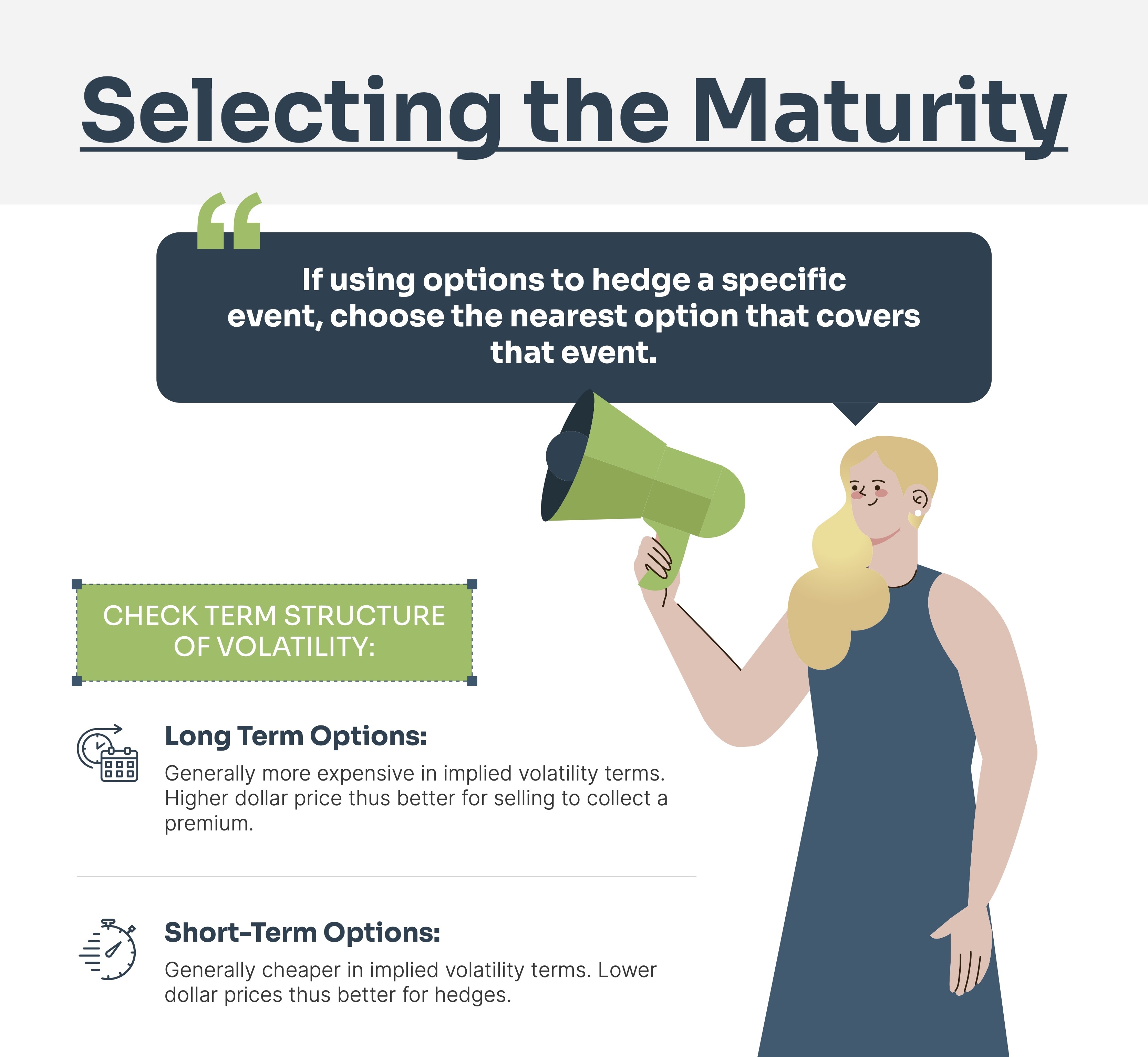
Start with a simple rule. If you are using options to cover a specific event, such as an earnings report or a product announcement, choose the nearest expiration that fully covers that event. Buying more time than the event requires means paying for time you do not need.
Beyond that, check the term structure of volatility, which is how implied volatility differs across expiration dates. It tells you whether time is currently cheap or expensive.
Longer-dated options are generally more expensive in implied volatility terms and carry a higher dollar price, which makes them better suited to selling, where a richer premium works in your favor.
Shorter-dated options are generally cheaper in implied volatility terms with lower dollar prices, which makes them better suited to buying, particularly for hedges where you want protection without a large outlay.
Most income sellers land on 20 to 45 days, which captures the steepest part of time decay without committing capital for months.
Step 3: Placing the Order
This step gets skipped in almost every beginner tutorial, and it quietly costs people real money.
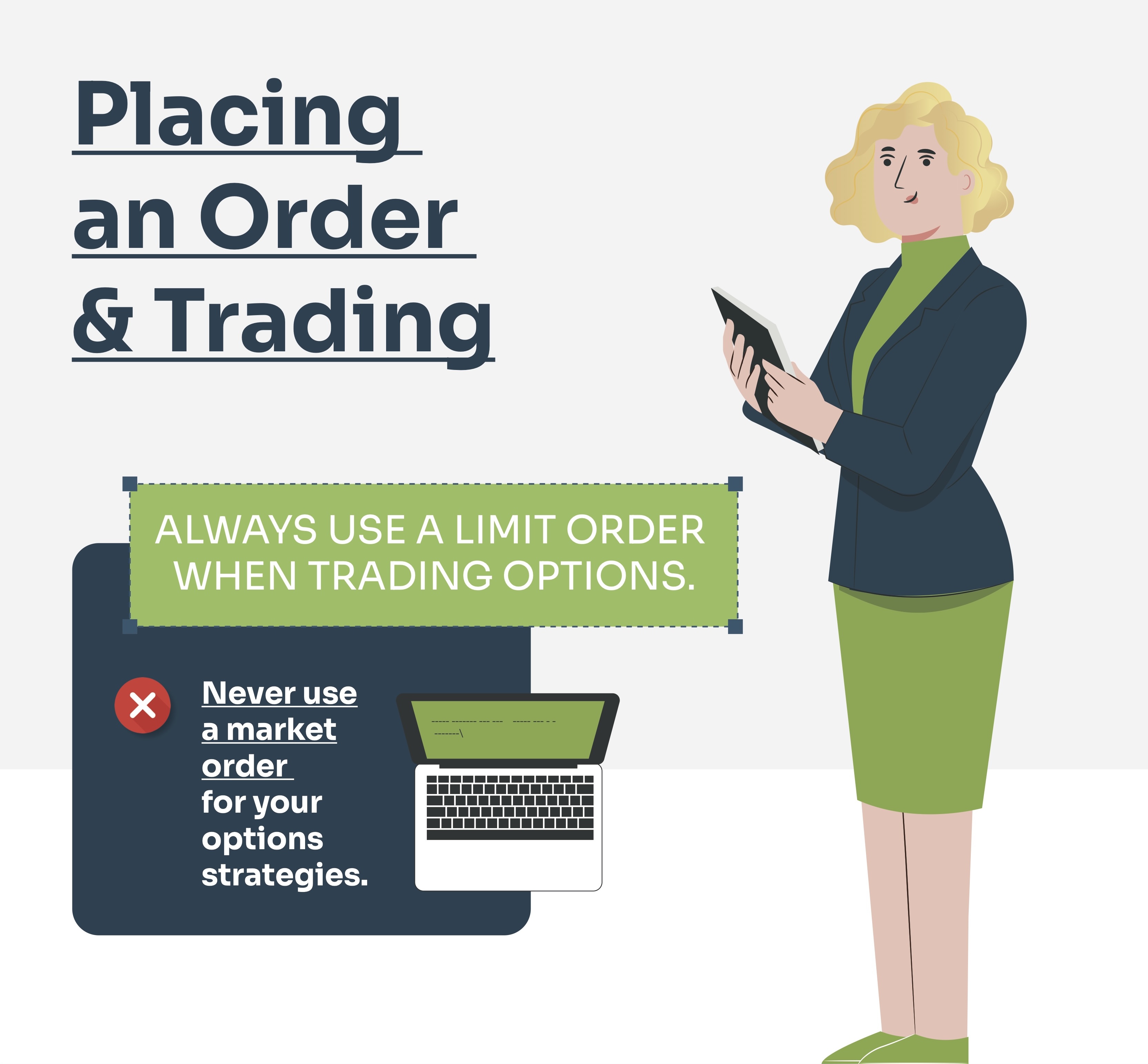
Always use a limit order when trading options. Never use a market order.
The reason is liquidity. Stock in a large company trades with a spread of a penny or two, so a market order fills at essentially the price you saw. Options are different. Each underlying has dozens of strikes across many expirations, and any single contract can have a wide gap between the bid and the ask. Send a market order into that and you accept the worst available price.
On a multi-leg strategy the problem compounds, because you pay that spread on every leg. A spread that looked like a $2.25 credit can fill at $1.90 for no reason other than how you entered it.
In practice: start your limit near the midpoint between bid and ask, then adjust toward the ask when buying, or the bid when selling, until you fill. If a contract will not fill anywhere near the midpoint, that is useful information. It usually means the option is too illiquid to trade comfortably, which is a reason to move on rather than a reason to pay up.
Step 4: Managing the Position
Once you are filled, your job changes from choosing to responding. For each of the four basic positions there are two moves that matter, and a reasonable action for each.
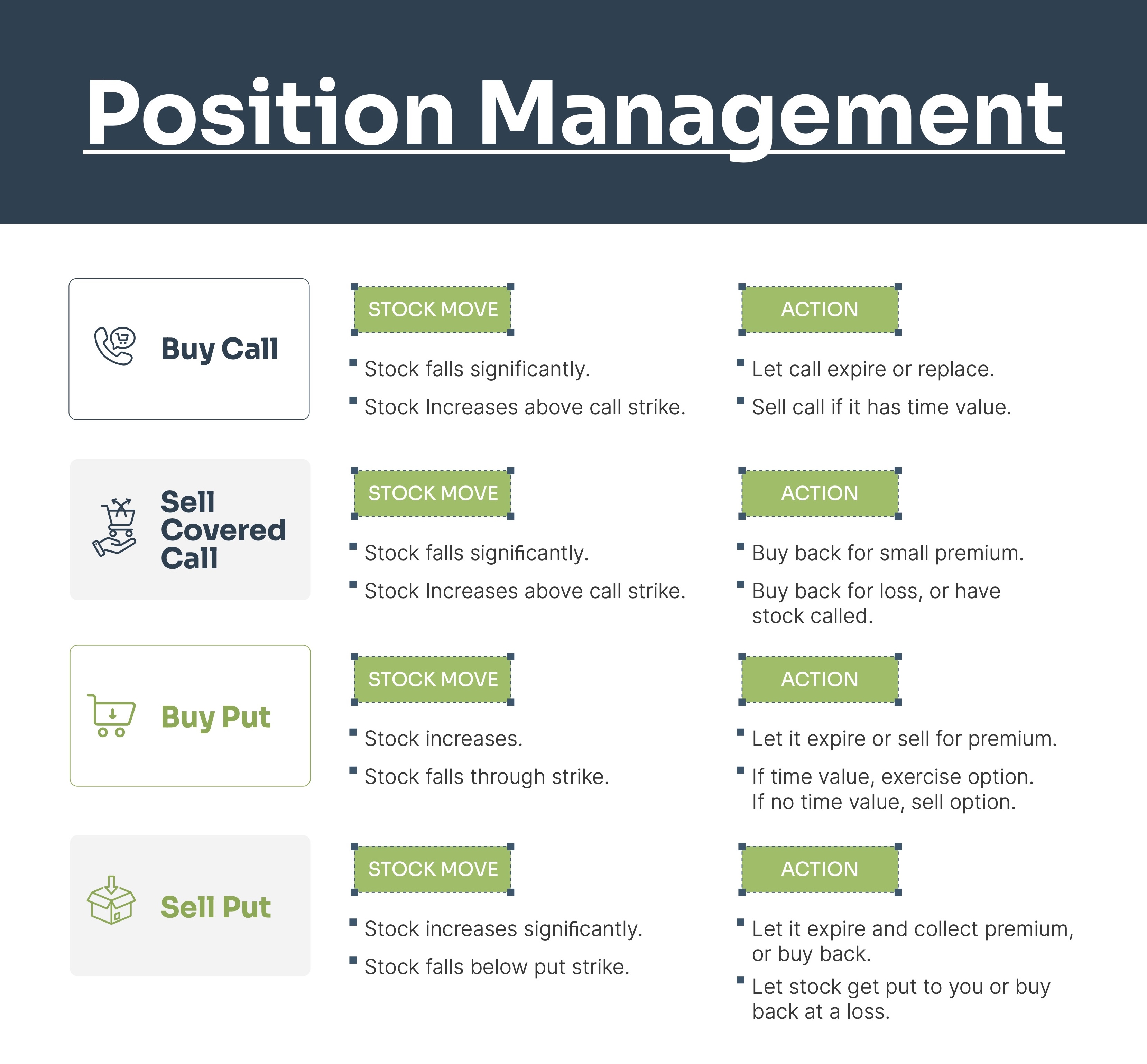
Long call. If the stock falls significantly, let the call expire or replace it. If the stock rises above your strike, sell the call while it still carries time value rather than exercising and giving that value away.
Covered call. If the stock falls significantly, buy the call back for a small premium and keep the difference. If the stock rises above your strike, either buy it back at a loss to keep the shares, or let them be called away at a price you already decided was acceptable.
Long put. If the stock rises, let the put expire or sell it for whatever premium remains. If the stock falls through your strike, sell the option while it still has time value and exercise only when it does not.
Short put. If the stock rises significantly, let it expire and keep the premium, or buy it back early to close the risk. If the stock falls below your strike, either accept assignment and buy the shares, or buy the put back at a loss.
In every case there are exactly two paths, and both were knowable before you entered. That is the point of running the mechanics in order: by the time the stock moves, you have already decided what you will do.
Step 5: Handling Positions Into Expiration
Expiration week is where unmanaged positions turn into surprises. Split your thinking into two windows.
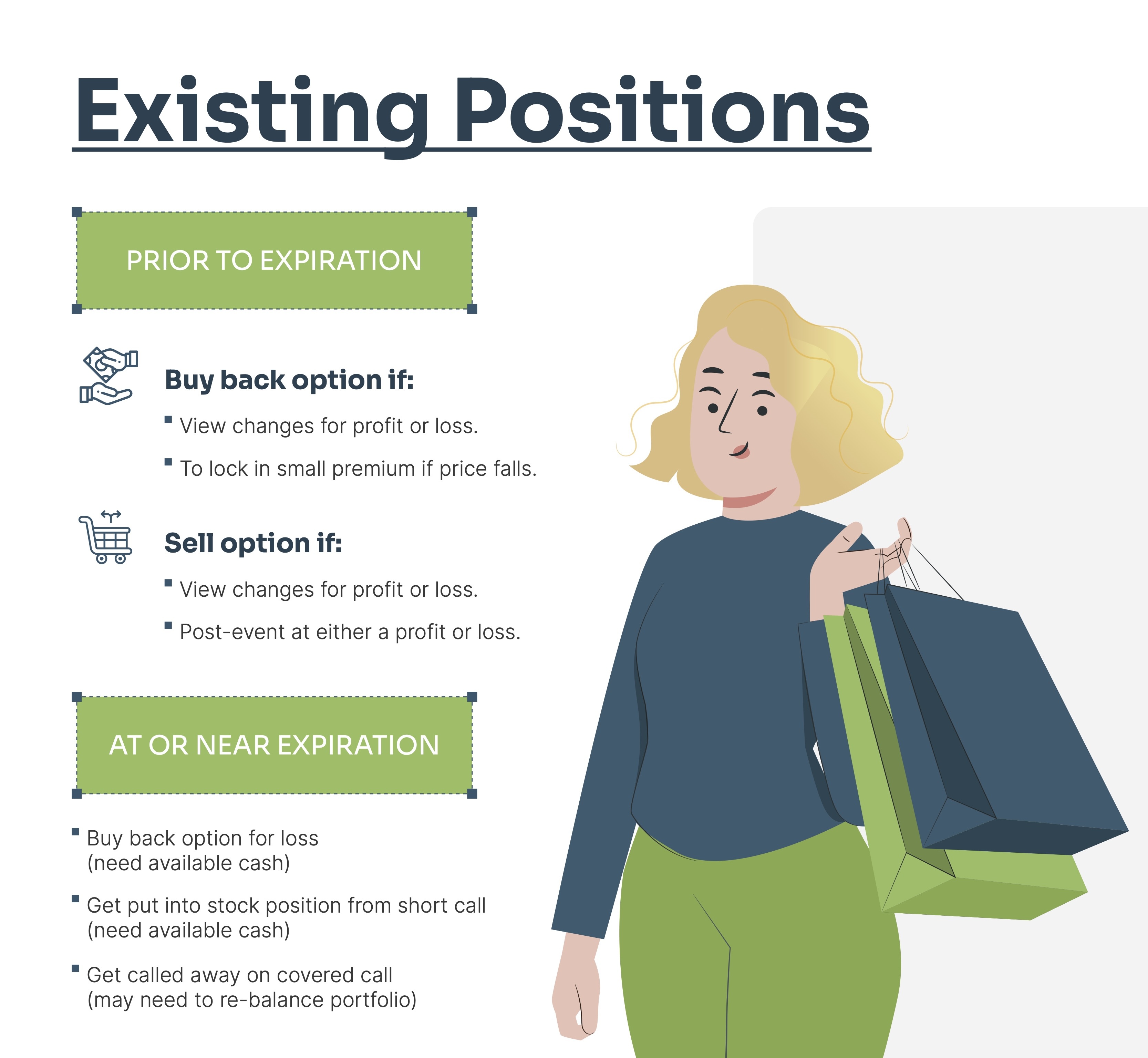
Prior to expiration you have full flexibility. Buy the option back when your view has changed, or to lock in a small premium after a favorable move. Sell the option when your thesis has played out, or once the event you were positioned for has passed, at either a profit or a loss. The advantage here is choice: nothing is forced.
At or near expiration, choices narrow and cash matters. Buying back a losing option requires available cash. Being assigned shares from a short put requires cash to buy them. Having shares called away from a covered call may leave your portfolio needing a rebalance.
None of those outcomes is a disaster, but each requires cash or an adjustment you should have anticipated. Check what expires this week before the week starts, not on Friday afternoon.
Learning This in Order
The reason this sequence is worth memorizing is that it is also the right order to learn in.
Vocabulary comes first, because you cannot evaluate a strike without knowing what premium, intrinsic value, and time value mean. Mechanics come second, which is everything on this page. Strategies come third, since a covered call or a put credit spread is just a combination of the mechanics above. Live practice comes last, in small size, with a written record of why you entered.
Most people invert this. They start with strategies they saw on social media, skip the mechanics, and end up guessing at strikes and sending market orders. A structured 21 day sequence exists precisely to stop that.
Frequently Asked Questions About Options Mechanics
Can you really learn options trading in 21 days?
You can learn the fundamentals and place your first informed trades in 21 structured days. Mastery keeps building after that, but a focused sequence eliminates the months most people waste wandering between random resources.
What should I learn first in options trading?
The core vocabulary and mechanics: how calls and puts work, what the premium buys, how strikes and expirations shape a trade, and how time decay and volatility move prices. Strategy only makes sense on top of that base.
How do I choose the right strike price?
Work backward from the outcome you would accept. Selling a put, choose a price you would be happy to buy at. Selling a covered call, choose a price you would be happy to sell at. Buying, weigh how much the strike costs against how much movement it needs to pay off.
Should I use a market order or a limit order for options?
Always a limit order. Options frequently have wide bid-ask spreads, and a market order accepts the worst available price. On multi-leg strategies you pay that penalty on every leg.
How far out should I choose expiration?
Far enough to cover any event you are positioned for, and no further. Income sellers commonly use 20 to 45 days to capture the fastest part of time decay. Shorter-dated options are usually cheaper in volatility terms and better for buying; longer-dated ones are richer and better for selling.
What happens if I do nothing at expiration?
Out-of-the-money options expire worthless. In-the-money options are generally exercised or assigned automatically, which can hand you shares or take them away, so confirm the cash and portfolio impact are acceptable before expiration week.
Final Thoughts
Options trading is far more mechanical than it looks from the outside. Strike, expiration, order type, management. Four decisions, in that order, on every position you ever open.
The traders who struggle are rarely the ones who misunderstood what a call is. They are the ones who guessed at a strike, bought more time than they needed, sent a market order into a wide spread, and then had no plan when the stock moved.
Run the sequence in order and most of that disappears.
Ready to work through the whole sequence with structure instead of guesswork? Options Trading in 21 Days covers it one day at a time, in order.
Keep Learning
📘 Options Trading for Beginners in 2026: A Complete Guide
Stay Connected!
Join our mailing list to get notified of all new blog posts, and receive the latest news and updates from our team.
